
U Impactify
1. Overview
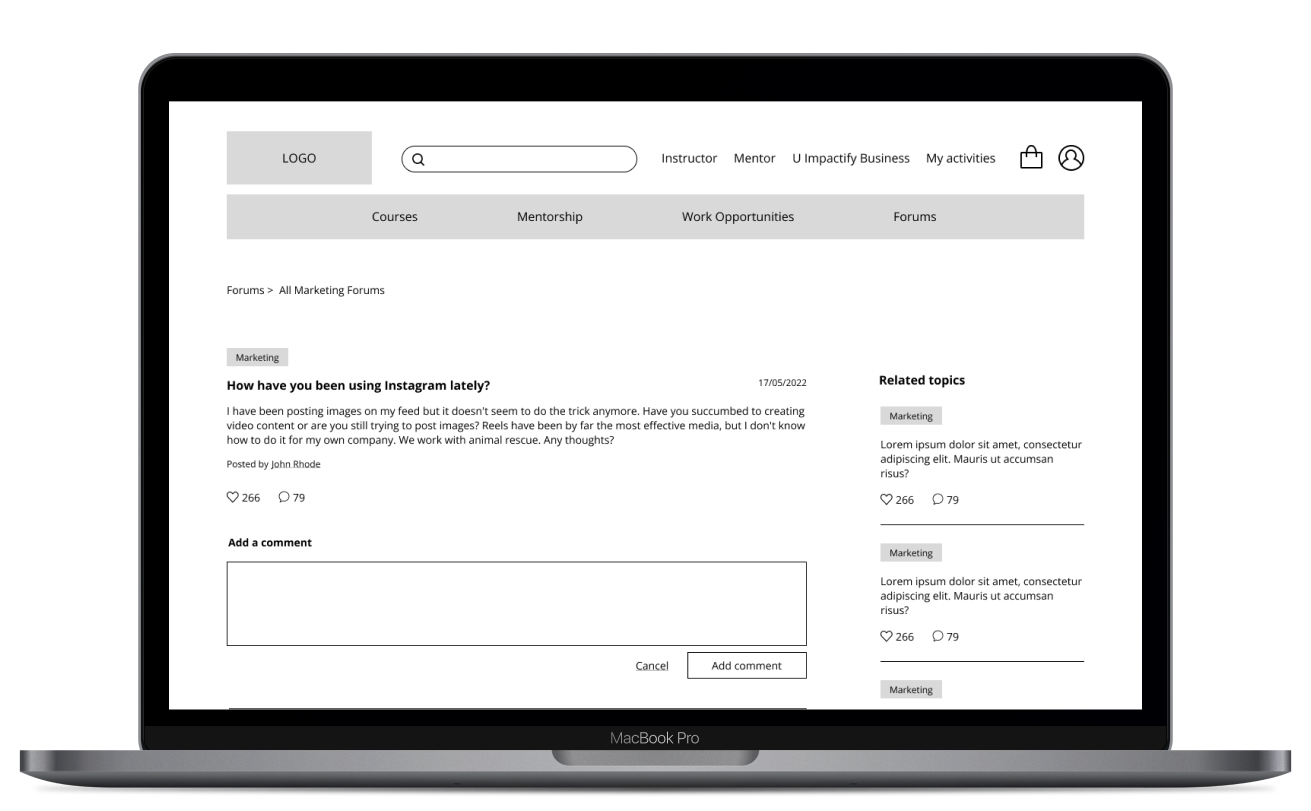
U Impactify is a career development platform with a specific focus on the social impact sector, which encompasses individuals and organizations dedicated to improving society, including non-profit entities. The platform offers users a range of features, including course offerings, the ability to schedule mentorship sessions with experienced professionals, access to work opportunities, and engagement with other users through a community system featuring forums for discussions on field-related topics. Currently, the service is in the design stage and is awaiting its official launch.
Date and duration
2 months
(Jun - Aug 2022)
Tools
• Figma
• Miro
Team
• Juliana Saboya
(UX Design Intern)
• Elif Aksit
(UX Design Intern)
Deliverables
• UX Research
• Customer Journey Maps
• Competitive Analysis
• Personas
• Sitemap
• Wireframing
2. Problem Definition
Starting point
Upon beginning our internship with U Impactify, Ashraful Hasan, the company's founder, asked Elif and me to redo the personas created by previous interns to add more depth to them. Additionally, we were responsible for implementing the updated brand and style guide into the existing designs within a Figma file.
What was the problem?
At first, we came up with the problem definition below thinking it made sense…
How can we refine the personas to serve them better using U Impactify, while presenting a unified UI?
…but turns out that we were wrong.
3. Discovery
User Research & Product Conceptualization
We started by reviewing research documents prepared by previous interns and conducting interviews with individuals who aligned with the personas we were working on.
However, as our work progressed, I observed that the product's concept and mechanics were not sufficiently solid and required dedicated effort before we could proceed. There was a lack of consensus regarding the core purpose and functionalities of the platform.
The initial intention was to filter the platform's content based on a role, such as a student or a mentor, that the user would define once they created an account. However, based on our research, we realized that limiting the user’s role was not a good idea since many of them wear multiple hats at work and are skilled in some aspects but need guidance on others, and the same could happen on the platform.
After some meetings with Ashraful, we started understanding his product expectations. Then I had the idea to create a Miro board to map what the platform would offer and how people would interact with it. I then developed the impact agent concept, and Elif and I mapped all the activities they could perform. The result is below:
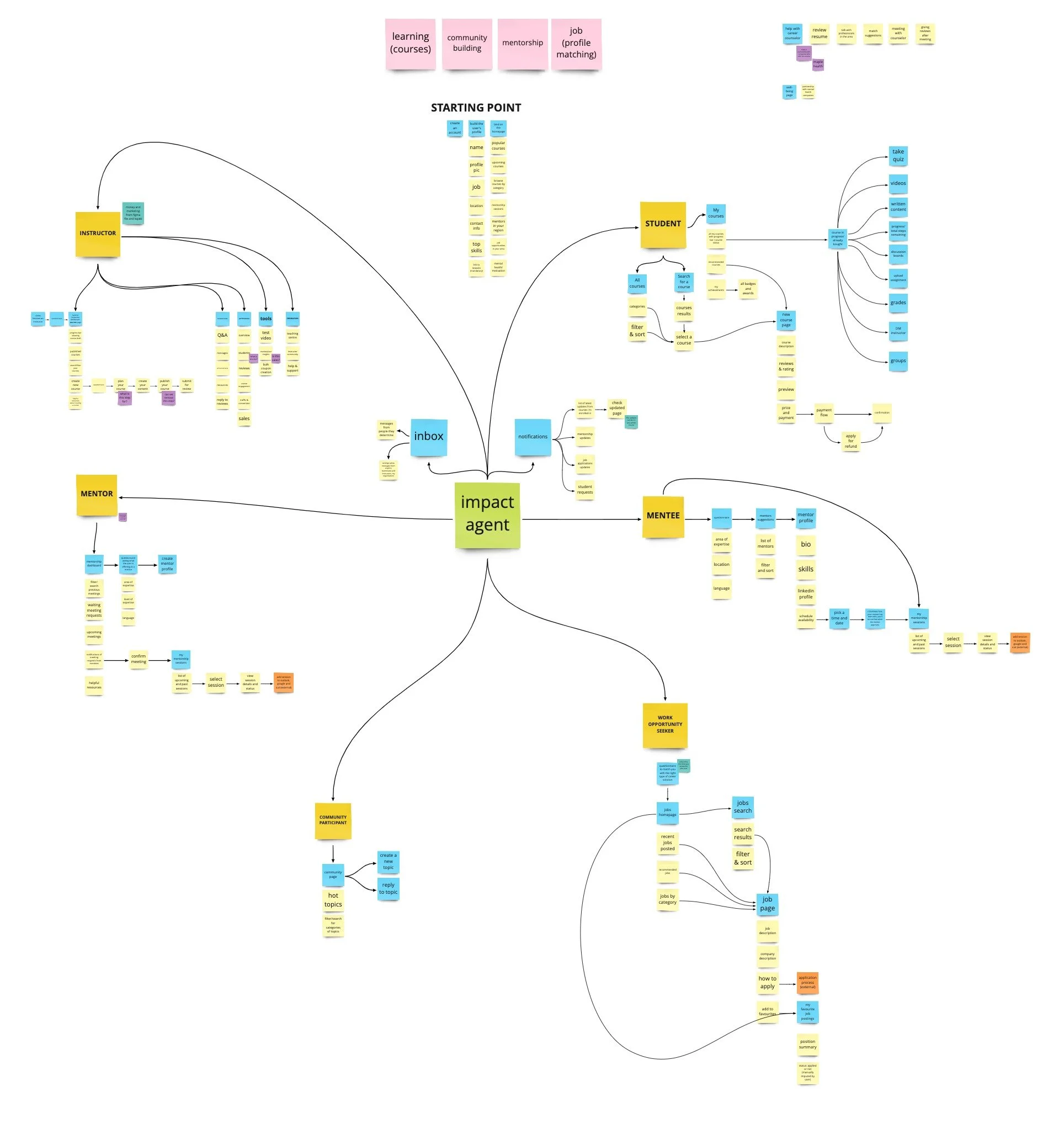
Impact agent concept and its related roles and activities
Click on the image to enlarge it
Problem Definition (part 2)
After rethinking the platform's concept, we created a new problem definition:
How can we develop a robust service that stands out from existing learning platforms and effectively serves the social impact industry?
Personas
With the definition of the platform's mechanics, we were ready to develop the personas. They should represent:
A Student (course receiver)
An Instructor (course giver)
A Mentor (gives guidance)
A Mentee (receives guidance)
A Work opportunity seeker (needs a job or freelance work)
A Work opportunity giver (offers a job or freelance work)
Community participant (creates forums and participates in discussions)
In the image below, we have a persona that represents someone who needs to acquire new skills and act as a student. They could also benefit from networking, then acting as a community participant.

Victor, the student and community participant
Click on the image to enlarge it
Customer Journey Map & Competitive Analysis
Next, we transitioned to creating customer journey maps, considering the various tasks the personas would undertake on U Impactify. In the image below, you will find the customer journey maps along with a competitive analysis from the perspectives of these personas. This analysis explores how their goals compare to other platforms in the same domain.
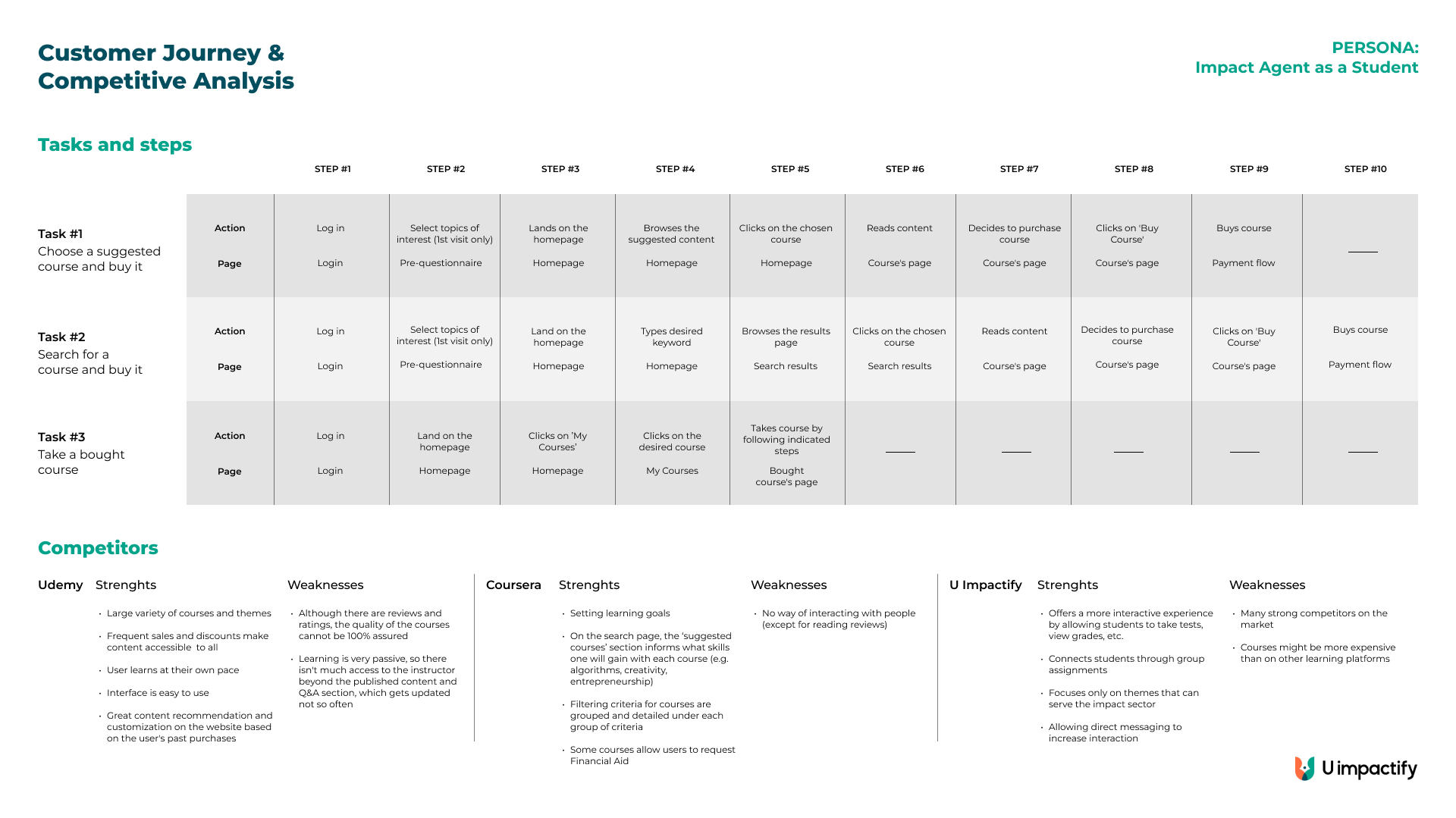
Possible journeys taken by a student, and how other competitors offer the same services
Click on the image to enlarge it
4. Designing
Site Map
Once the research and conceptualization phase concluded, the next step was to create a site map. I developed the version presented below and discussed it with the team.
We collectively decided that the website's structure should prioritize the needs of the "receiver," referring to individuals seeking courses, mentorship, work opportunities, and forums. This emphasis is reflected in the orange categories and the inclusion of the "My Activities" item in the top menu.
For users interested in offering courses, mentorship, or work opportunities, separate dashboards were accessible by clicking on the respective items in the top-right menu (Instructor, Mentor, and U Impactify Business). This decision was informed by industry standards observed in platforms such as Udemy, Coursera, LinkedIn, and ADPList.
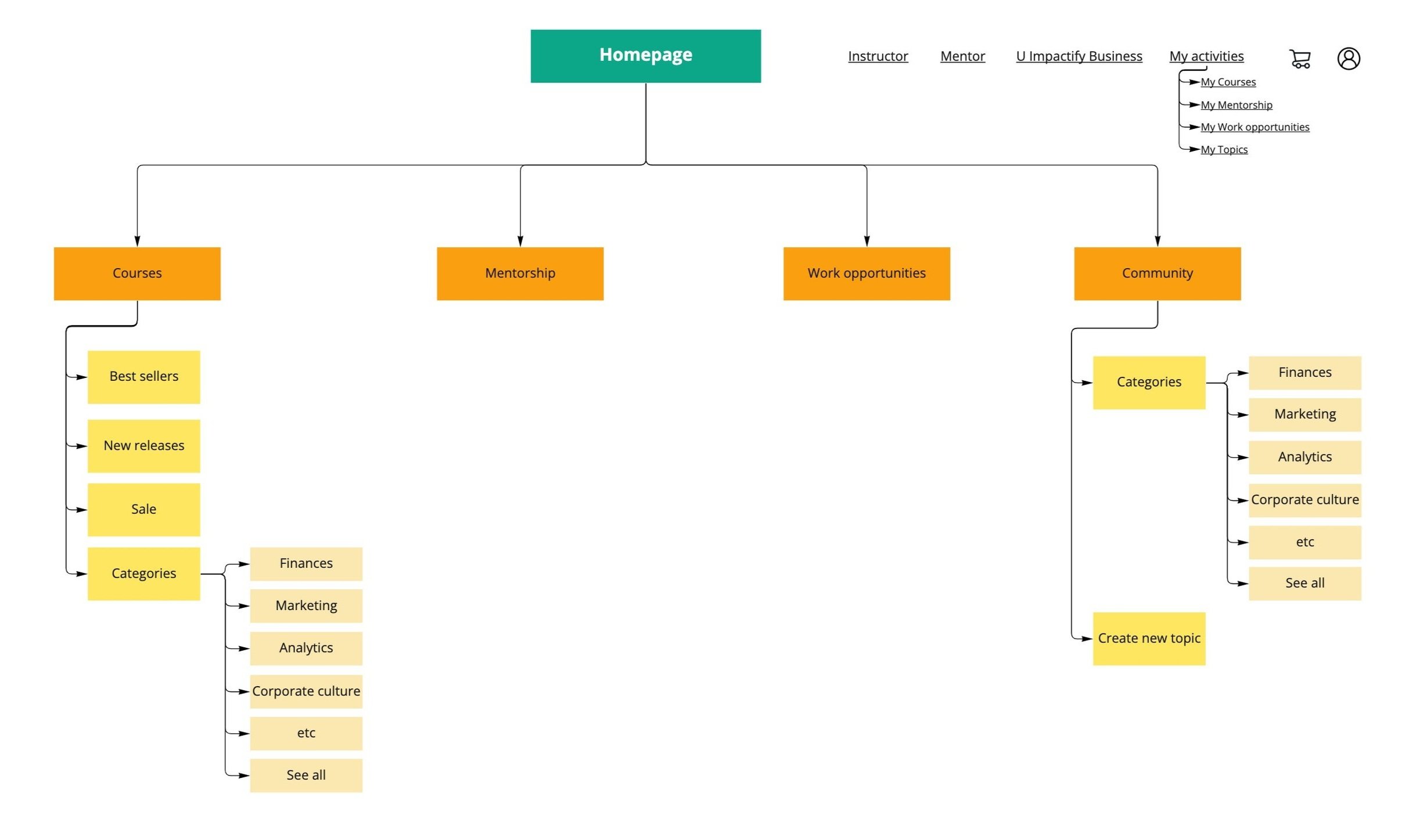
U Impactify's sitemap
Click on the image to enlarge it
Wireframing
Initially, Ashraful requested us to create a service blueprint for the project. However, I proposed including wireframes as well, as it would provide us with a clearer visualization of the page contents. As it turns out, we will not be able to utilize the designs previously created for U Impactify by the former designers, as the concept has undergone significant changes.
Elif and I divided the work between us. I focused on designing the My Activities pages, Work Opportunities, and Community sections, while Elif took charge of the homepage, Courses, and Mentorship pages.
Below, you will find a selection of the pages that I have designed.
My Activities
This section provides users with access to all the functionalities and services that are already associated with them in some way. It is where they can view and engage with their purchased courses, manage mentorship sessions, access saved work opportunities, and participate in forums they have created.
The navigation at the top of the page allows users to explore these primary categories, with Courses being the initial landing page.
The image on the right showcases the My Courses page (desktop version), where all purchased courses are displayed. Users have the flexibility to customize their view of this list using filters, tailoring it to their preferences.
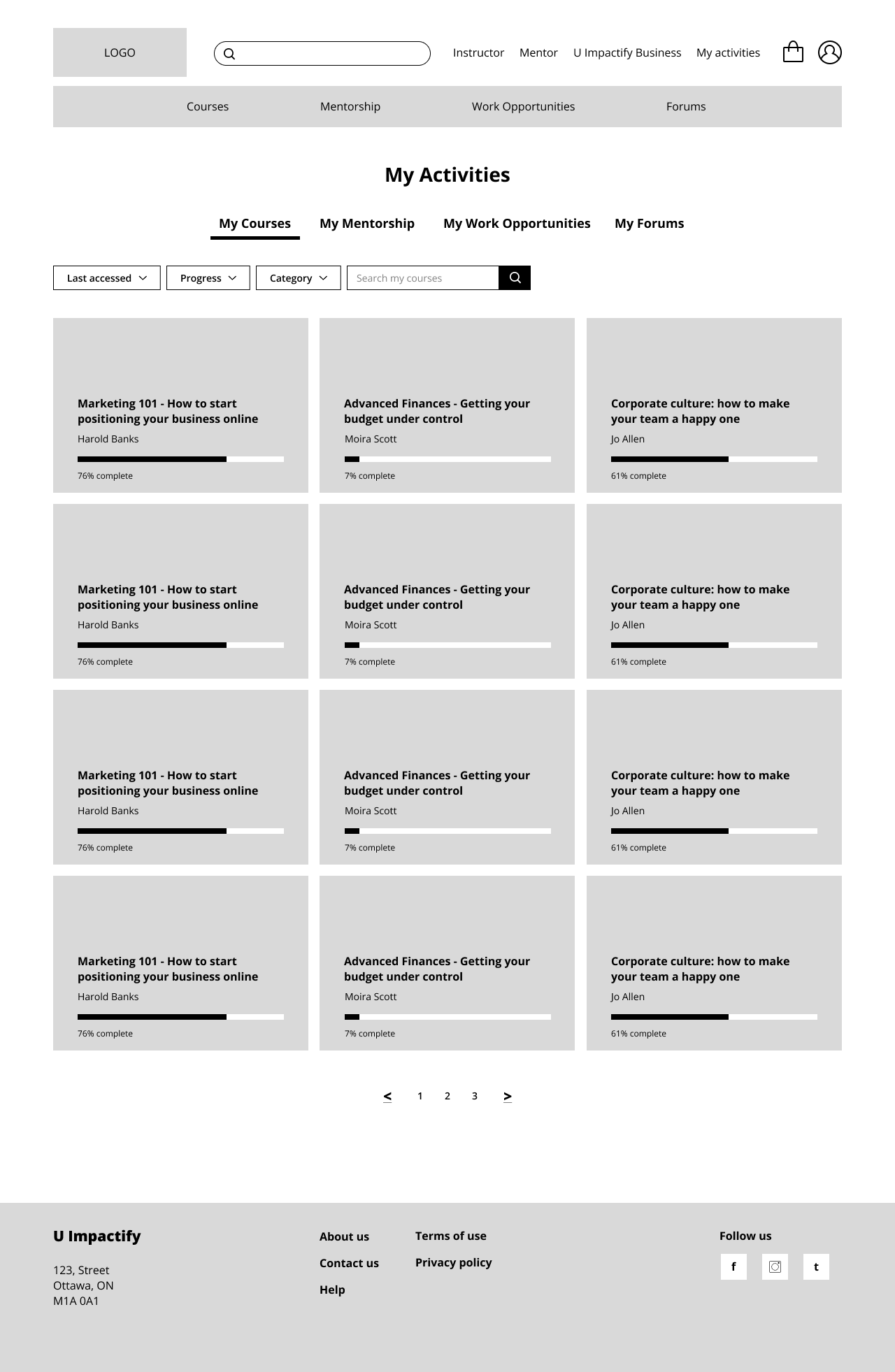
My Courses page
Click on the image to enlarge it
Once a user selects a course to take, they will be directed to the Content tab, which showcases the step they last accessed. The structure I designed enables instructors to incorporate various forms of media, including videos, text, and images.
In addition, the Assignments tab provides students with an overview of all tasks they need to complete. It includes information such as due dates, grades, and any additional details related to the assignments.

Content tab under a course
Click on the image to enlarge it

Course assignments
Click on the image to enlarge it

Course discussions
Click on the image to enlarge it
In the My Mentorship section, the user can manage upcoming, past and requested mentorship sessions.

Upcoming mentorship sessions
Click on the image to enlarge it

Mentorship sessions requests
Click on the image to enlarge it
Forums
The Forums page lists the trending discussions and others related to the category the user interacts with the most, which they can customize. Additionally, the page includes a dedicated section that encourages users to adhere to the community guidelines and foster a respectful environment for all participants.

Forums homepage with trending discussions, categories and more
Click on the image to enlarge it
Deep Sitemap
As our three-month internship was coming to an end, I recognized the limitations of designing all the pages for the platform within this timeframe. To address this, I proposed the creation of a comprehensive sitemap that would encompass all the pages Elif and I had designed during our internship. Each page was meticulously listed and numbered, forming a valuable document that future designers can refer to for a thorough understanding of the envisioned structure.

Deep Sitemap
Click on the image to enlarge it
5. Prototype
You can check my contribution to this project by accessing the low-fidelity prototype. Just click on the button below.
6. Learnings
Working on a platform with such intricate interactions was a new experience for me. Previously, my focus had primarily been on content-based projects. The complexity of this project has continuously challenged me to consider how to construct a logical user journey that aligns with the personas' needs and adheres to UX best practices, including heuristics.
Moreover, this project has been a fantastic opportunity for me to hone my critical thinking skills. Initially, I hesitated to question the core concept of U Impactify, given the extensive prior work that had been completed. However, I soon realized that reevaluating everything was necessary for progress.
I am fully aware that U Impactify is a highly complex endeavour, and there are numerous additional scenarios that need to be designed before the UI phase begins. Nevertheless, I am optimistic that we have established a solid foundation for the next team of designers to build upon.